
Furniture
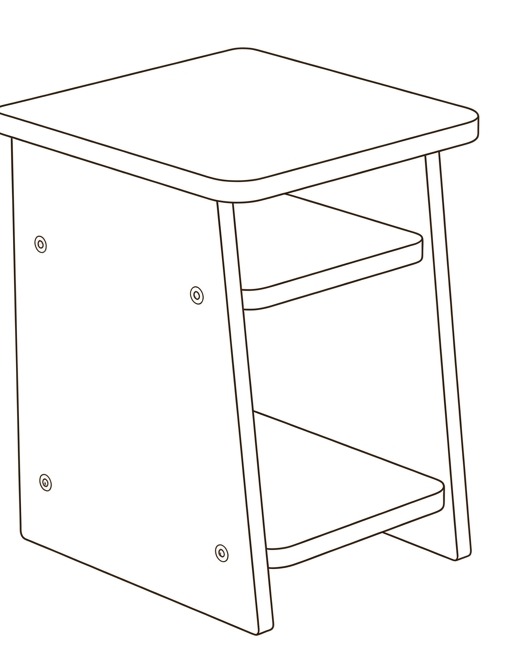
PW-22 Perch Bedside Table
Regular Pricing£435
Member pricing£370(-15%) · for approved members
This bedside table reimagines everyday waste as a refined, functional piece of furniture. Crafted from recycled plastic waste, the material has been pressed into durable sheets that reveal a distinctive speckled pattern throughout the…
Specification
Shipping and returns
Delivery options, lead times and returns terms will be confirmed for your order. Contact MadeBy with your delivery location and quantity.
Questions
For materials, samples, care, installation or project quantities, ask about this piece.
A record that travels with the piece.
What a piece is made from, how it came together and what happens to it next — held as one record rather than a page of claims.
Passport in development
Carbon against an imported table
89.6%
Less CO₂e per table
- Saved in production
- 5.78 t CO₂e
- Kept from landfill
- 2.58 t CO₂e
Passport record
pw-22-perch-bedside-table
- Material
- 100% recycled and 100% recyclable HIPS & HDPE
- recorded
- Total weight
- 0.92 kg
- recorded
- Total waste weight
- 138 g
- recorded
- Made at
- London, UK
- recorded
- Assembled at
- Oxford, UK
- recorded
- Waste stream
- Packaging, bottle caps and damaged fittings
- recorded
- Feedstock
- Known HDPE or PP — Single-polymer streams assessed separately
- recorded
- Preparation
- Sorted, cleaned, dried and shredded to a controlled flake
- recorded
- Assembly
- Stainless Steel Coutner sunk M6 Bolt
- recorded
- Repair
- Components can be taken apart, replaced or reprocessed
- recorded
- End of life
- Sent to London for shredding & reprocessing
- recorded
How it's made
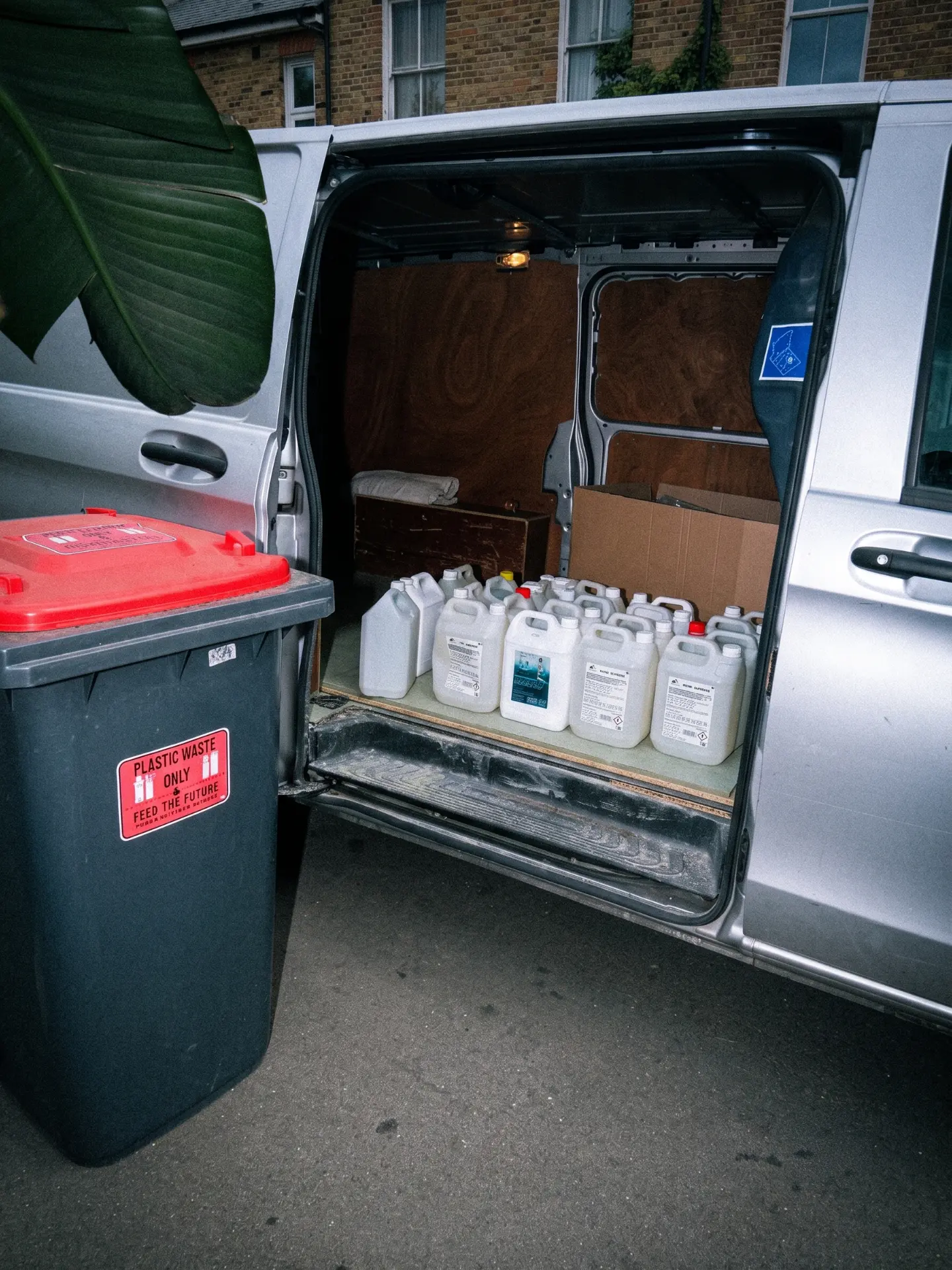
From packaging, bottle caps and damaged fittings to this piece.
A mixed visual language of colour and fleck, sorted into known polymers before it is shredded, pressed and machined.
Read the plastics streamStep 01
Identify and sort
Items are grouped by known polymer and colour. Incompatible pieces are removed.
Step 02
Wash and dry
Residue and labels are removed so moisture and contamination do not compromise the next stage.
Step 03
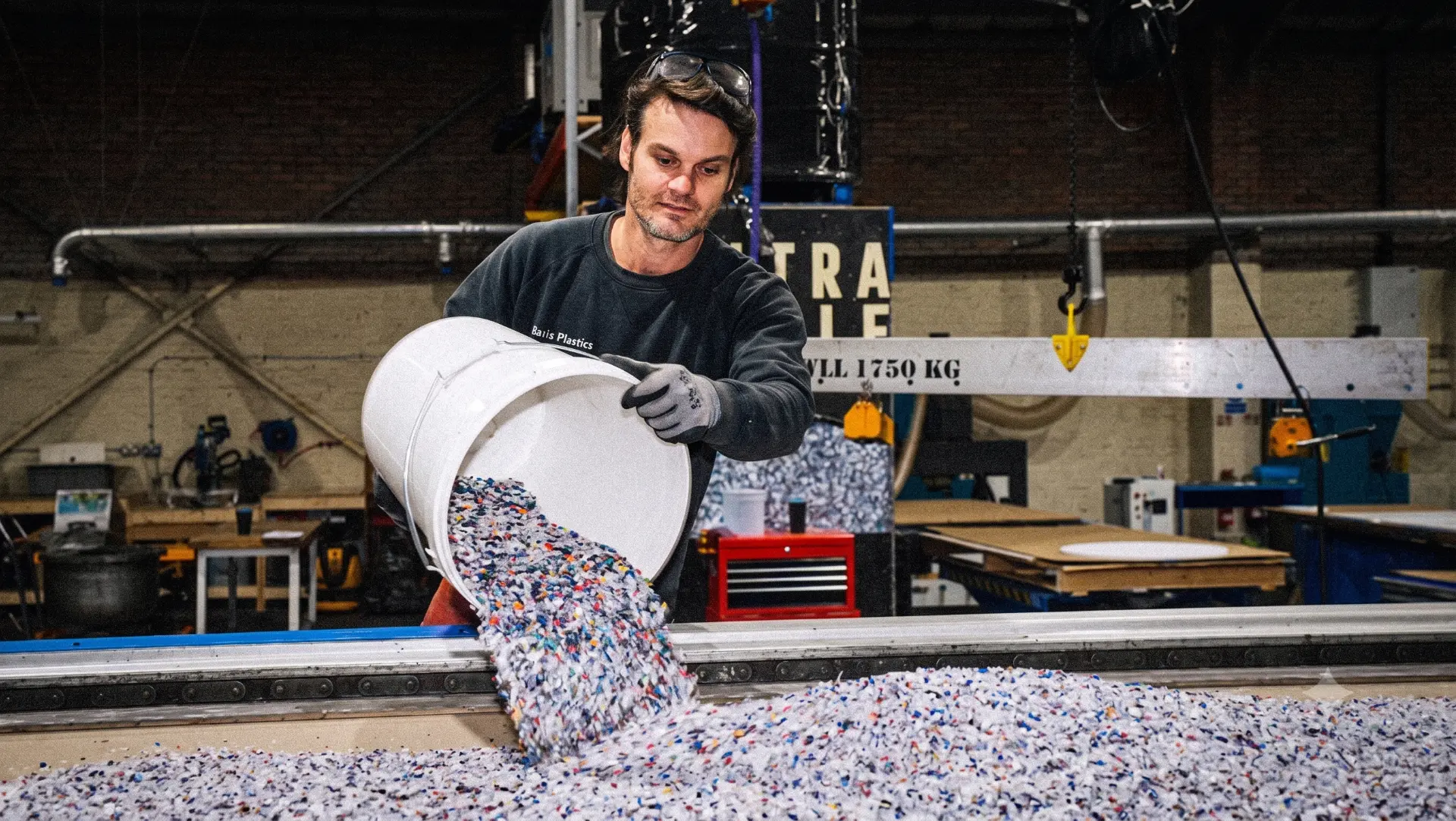
Shred
Material is reduced to a controlled flake, with colour mixes recorded for repeatable visual recipes.
Step 04
Heat and press
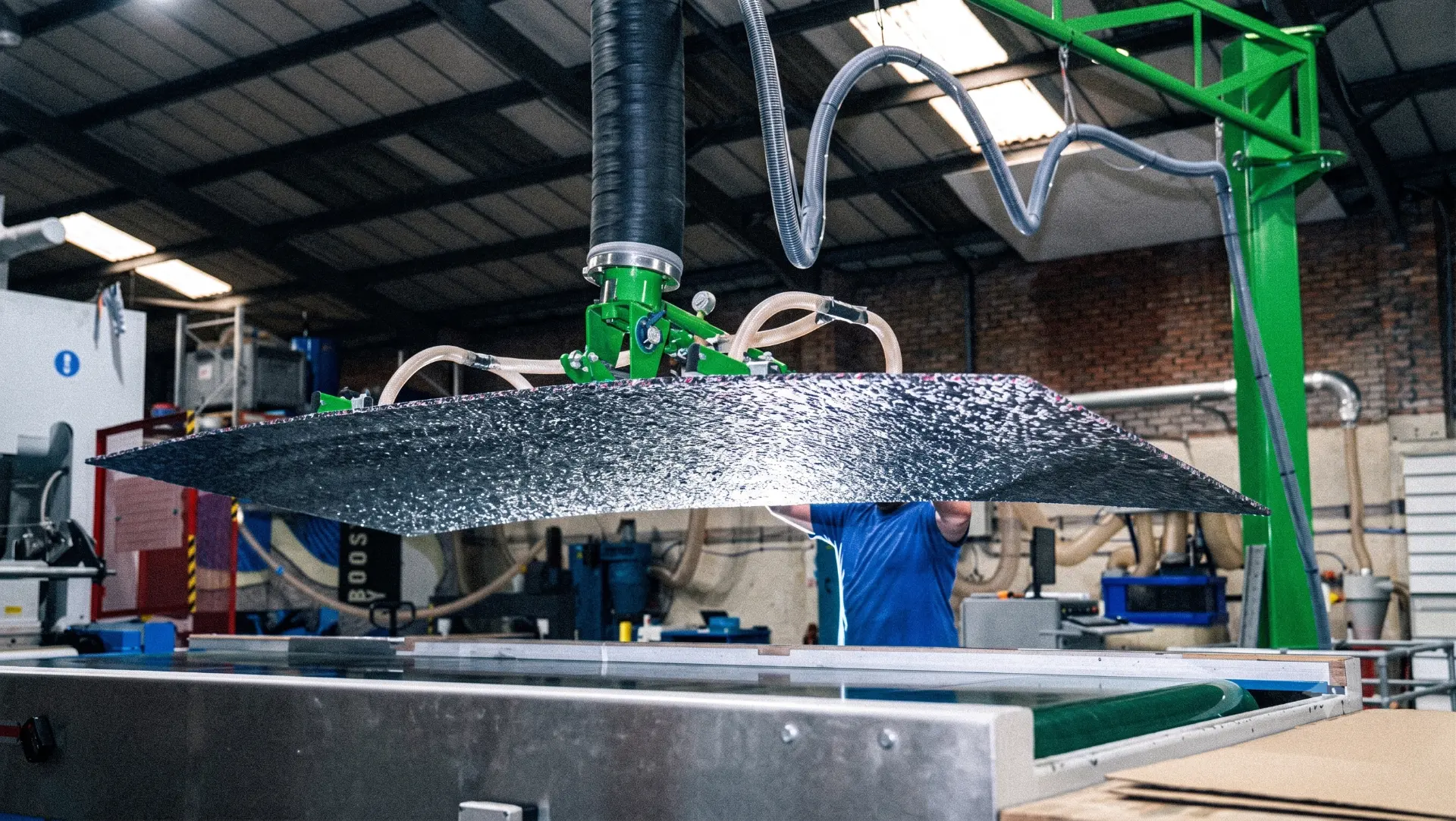
Flakes are mixed with 100% recycled plastic and heated in a press and cooled under pressure into a stable sheet form.
Step 05
Machine and assemble
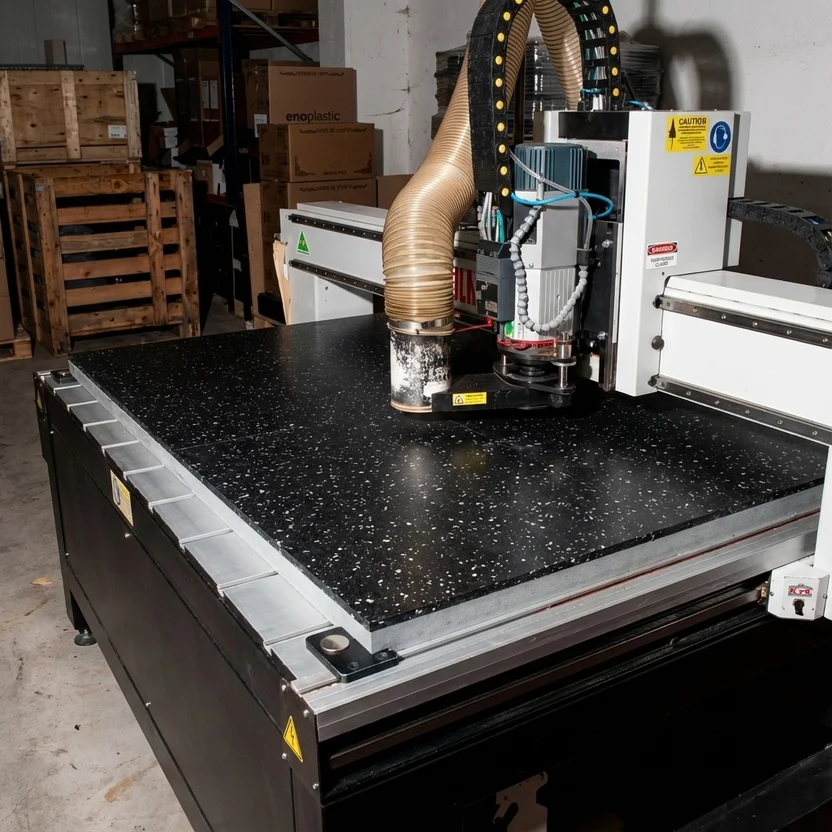
Parts are cut and joined with reversible fixings where the design allows.
Designed from the sheet
Every part earns its place.
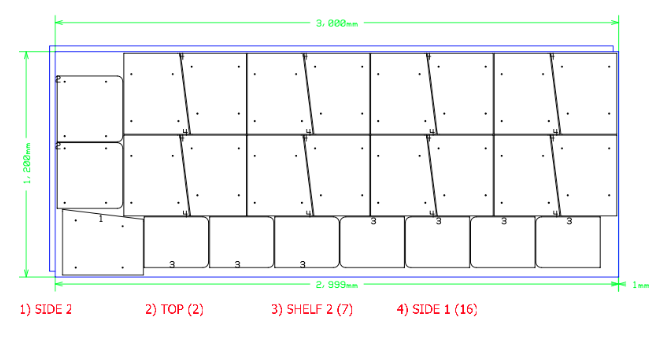
The table is cut from a sheet of recovered plastic, planned before cutting so each part tessellates and we get the most from our waste material. The pressed surface keeps the speckled pattern of the original waste.
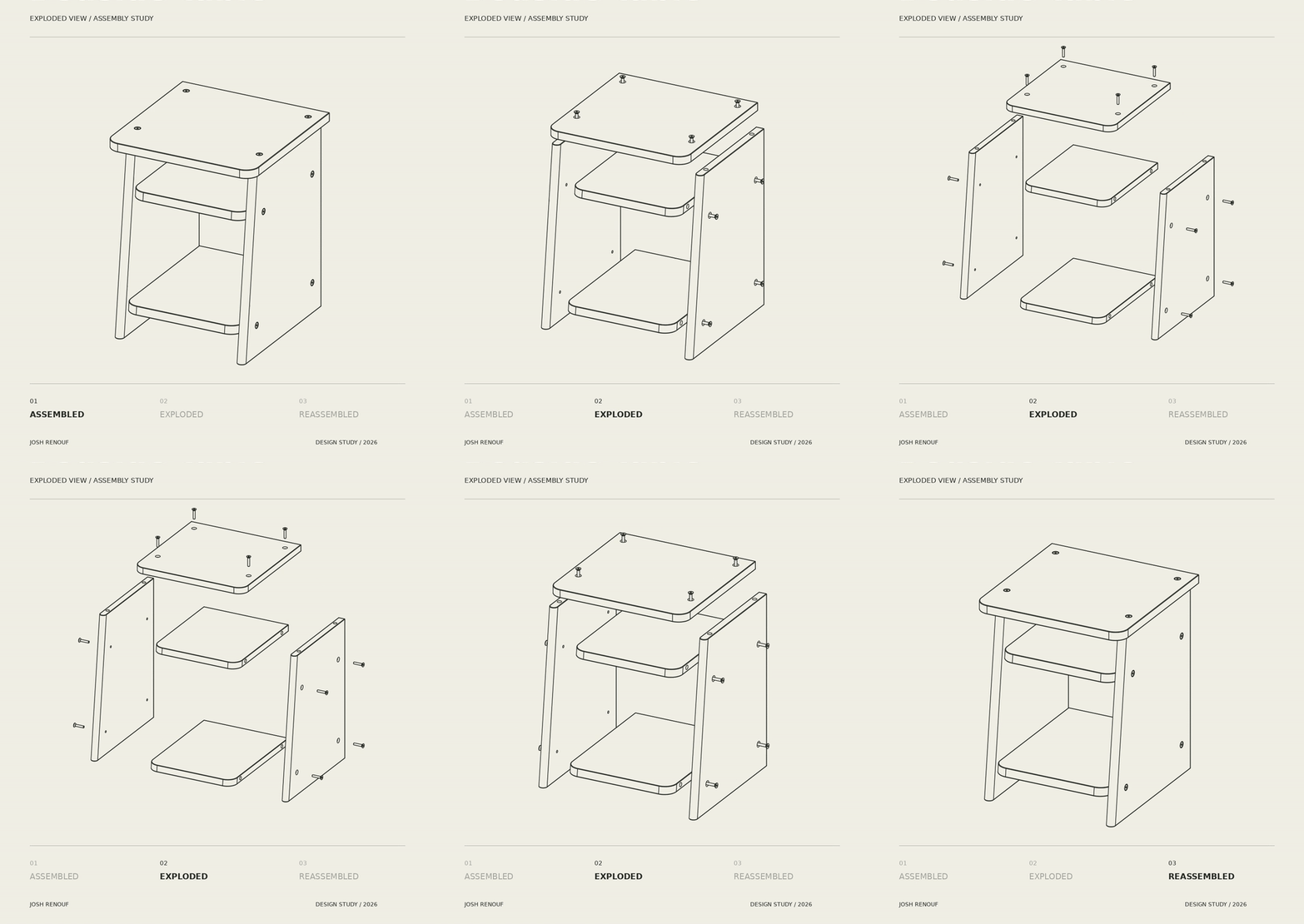
The fixings are left exposed on purpose: the table can be assembled, taken apart and repaired, and a part that does come off can go straight back into the next batch.