Source
Bottles from bars, restaurants and rooms

Bottles from bars, restaurants and rooms
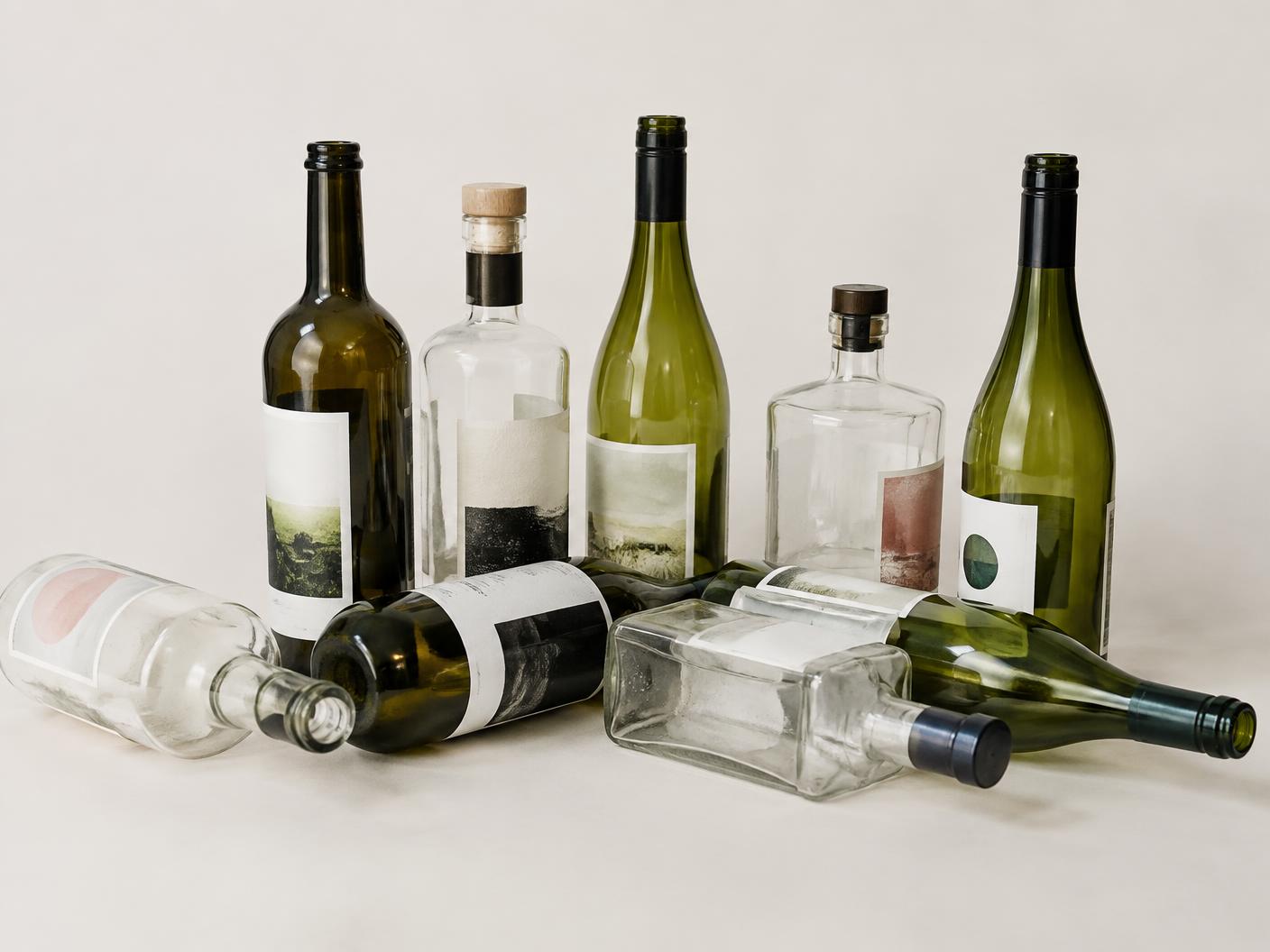
Hotels handle a steady flow of whisky, wine, spirit and water bottles. Once separated by colour and contamination, that familiar pile becomes a precise mineral feedstock rather than an anonymous bin of glass.
Why it’s worth recovering
Colour and particle size remain legible, so the new material keeps a direct visual connection to the bottles it began as.
Clean glass is stable, hard-wearing and suited to surfaces where texture and longevity matter.
Hospitality sites produce bottles every day. Keeping that stream separate makes collection and material development more consistent.
From waste stream to part
Bottles are kept separate at source and moved out of the operational waste stream.
Step 1Caps, labels and contaminants are removed; glass is grouped where colour control matters.
Step 2The glass is reduced to controlled particle sizes, from visible chips to a sand-like aggregate.
Step 3The graded material is combined with an appropriate binder or fused in specialist production, depending on the product brief.
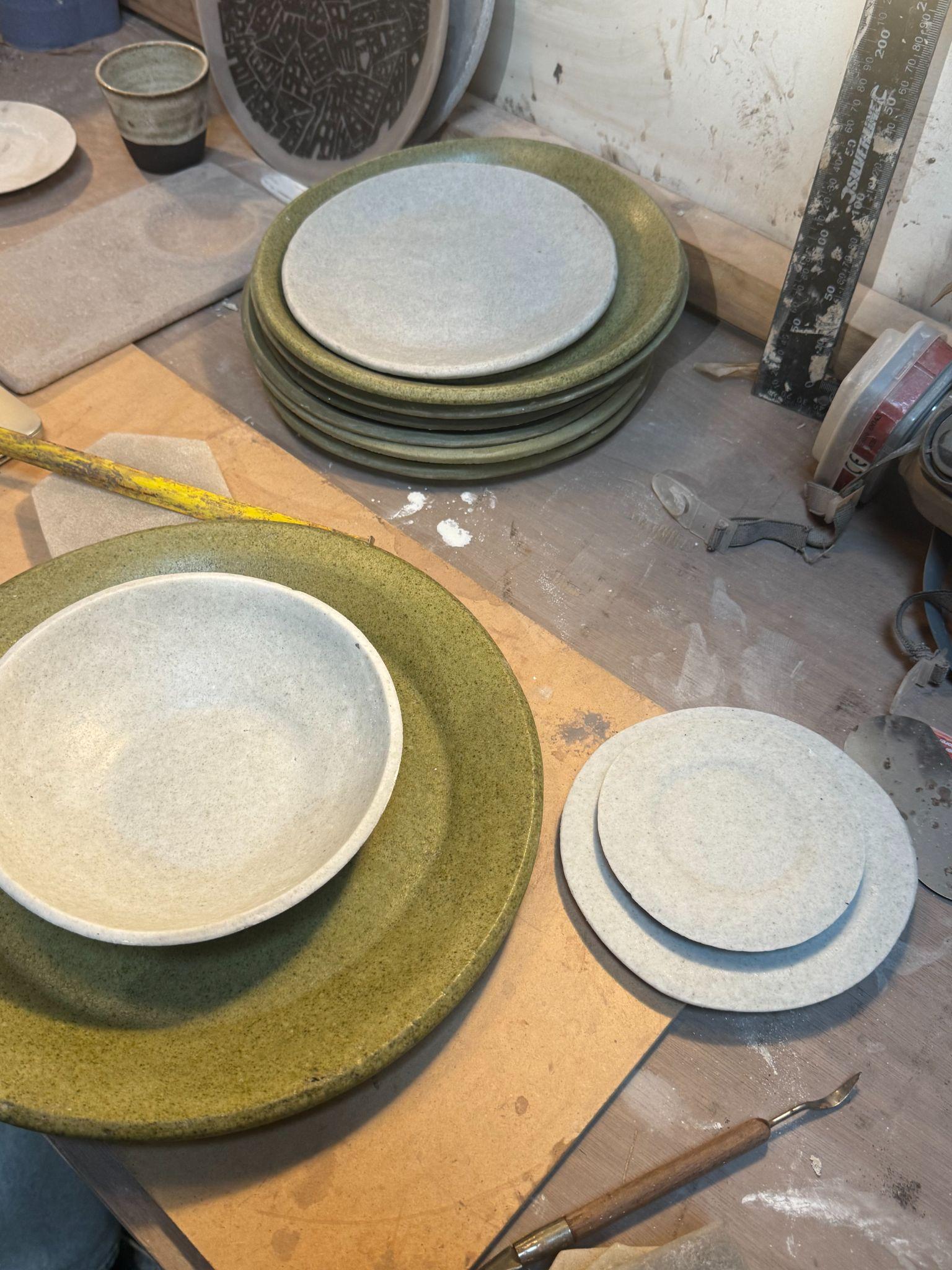
Step 4Surfaces are cut, ground and polished to reveal the recovered aggregate, then assembled for use.
Step 5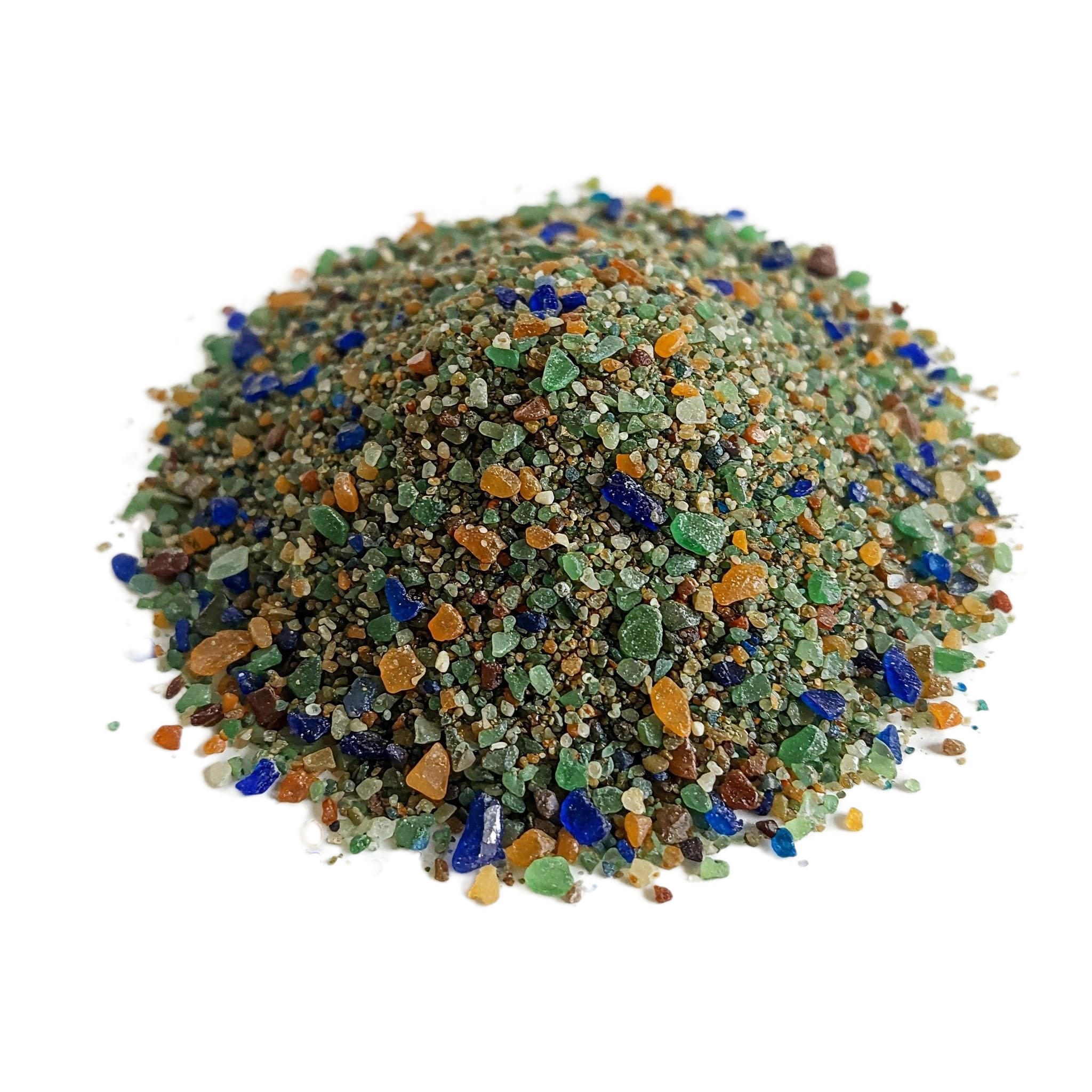
Technical data
Manufacturing into new things
Particle size changes both the look and behaviour of the mix. Samples establish the right balance before a component is drawn.
Cutting and polishing trials define safe, durable edges and reveal how the aggregate reads at the surface.
Rather than disguise variation, the design uses it as evidence of the original glass stream.
Where it doesn’t belong
Sample recipe / Glass
This record keeps the source, preparation and production decisions together, so a promising sample can be reviewed and repeated.
Illustrative sample recipe. Binder, forming conditions and performance tests are set for the final application.
From source to specification
Material development begins before the workshop. Separation at source protects identity and quality; sampling establishes variation; testing matches the material to an application. Only then can repeatable production be discussed.
Bottles from bars, restaurants and rooms
De-labelled, cleaned, crushed and graded by particle size
surfaces, tiles, table elements and future product trials
Samples, process notes and application-specific checks are kept close to the object.
Material record
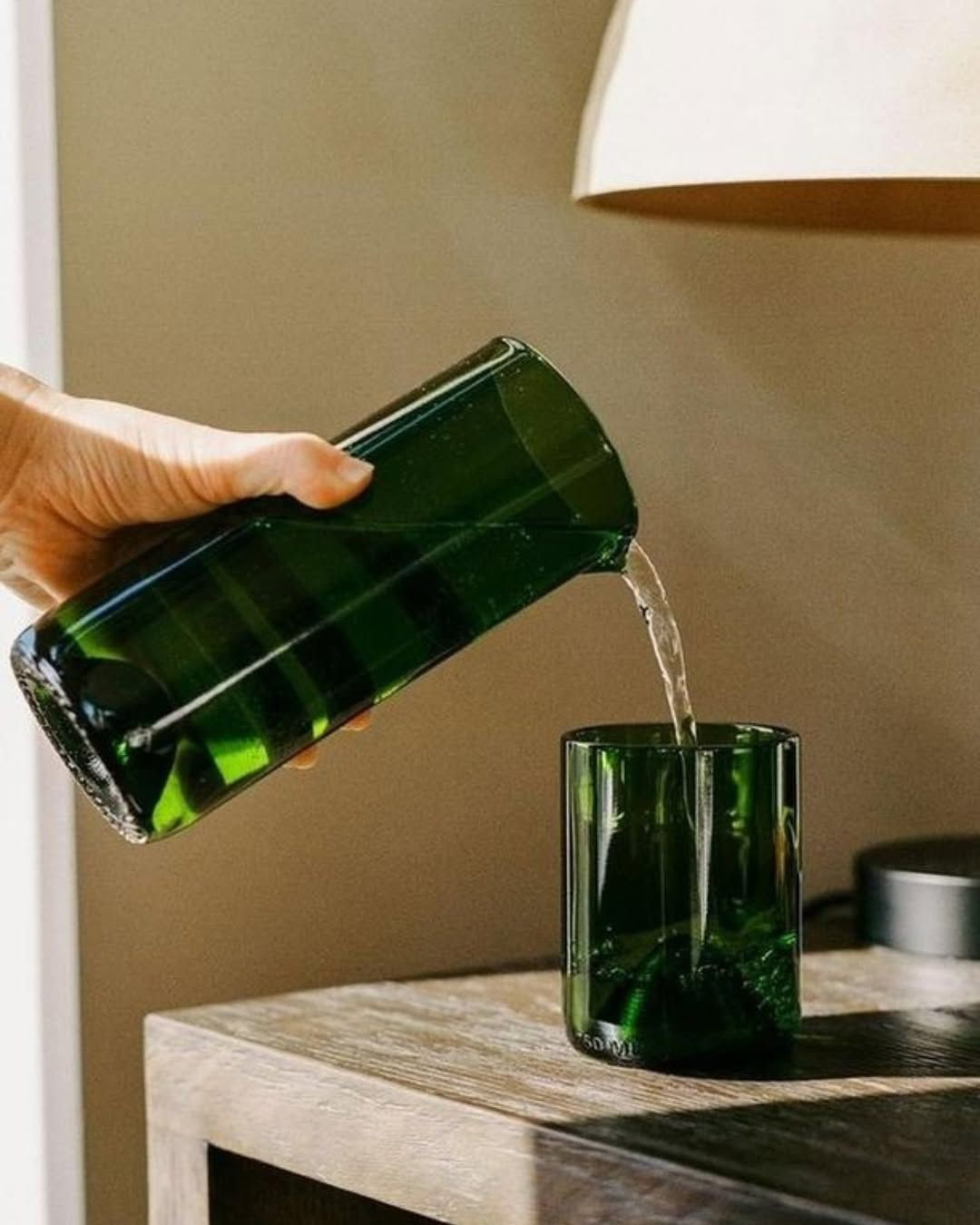
Each application is intended to carry a useful record: what the object is, where its material came from, how it was prepared, what care it needs and what to do when its first use ends.