Source
Coffee bars, breakfast service and kitchens

Coffee bars, breakfast service and kitchens
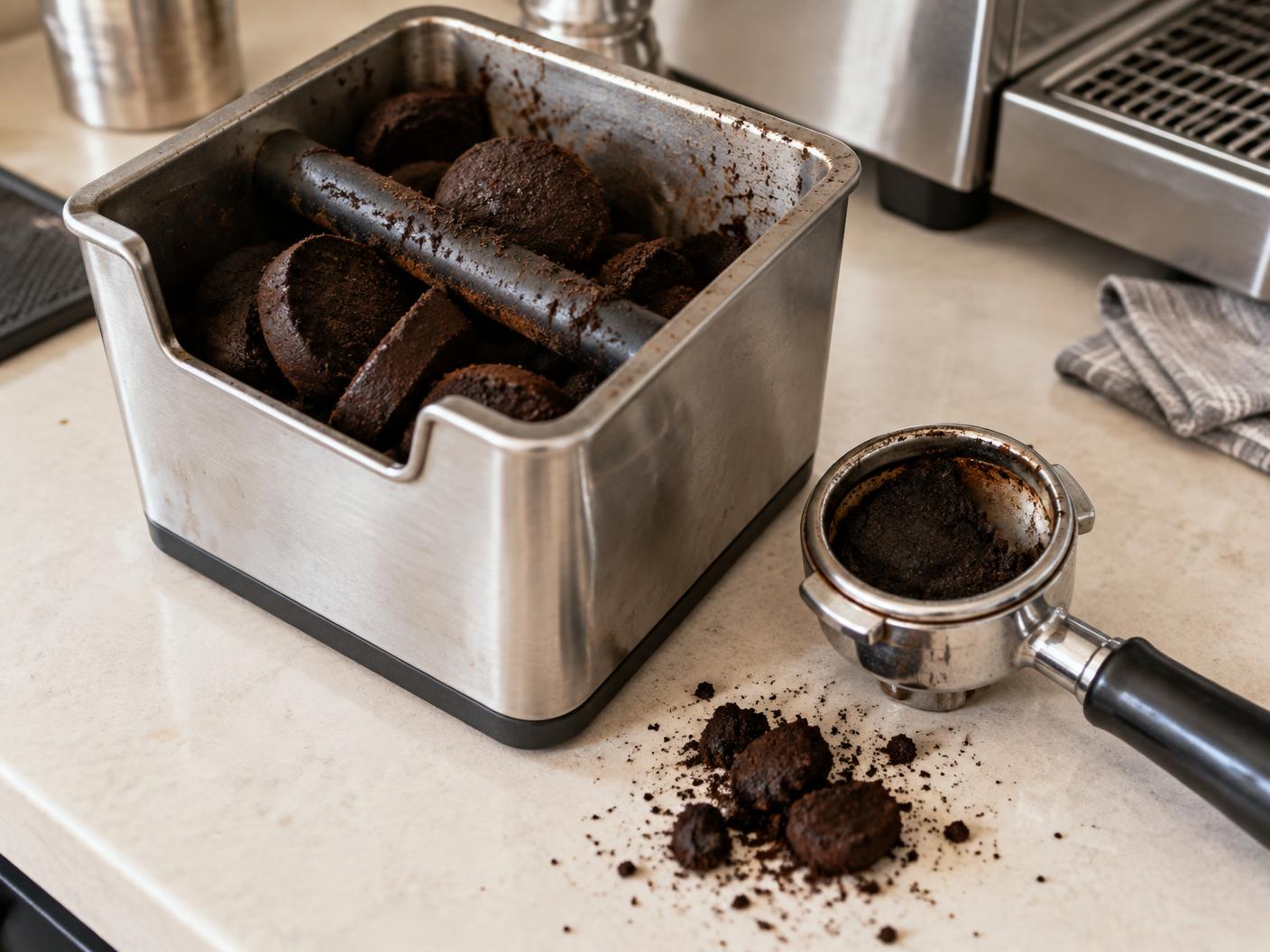
Coffee grounds leave the machine warm, wet and heavy. The critical first transformation is simple: collect them cleanly and remove moisture. Once dry and graded, the grounds can become part of a repeatable composite recipe.
Why it’s worth recovering
Coffee is made throughout the day, giving participating sites a consistent material stream with a direct connection to guests and staff.
The natural dark speckle and texture come from the grounds themselves rather than a printed finish.
Once dried and compounded, the material can be compounded with bio PLA then extruded into filament for 3D printing.
From waste stream to part
Grounds are captured separately at the machine, without tea bags, food or other service waste.
Step 1Moisture is removed promptly to stabilise the material and make storage and transport practical.
Step 2Grounds are combined with a bio PLA recipe for the forming method.
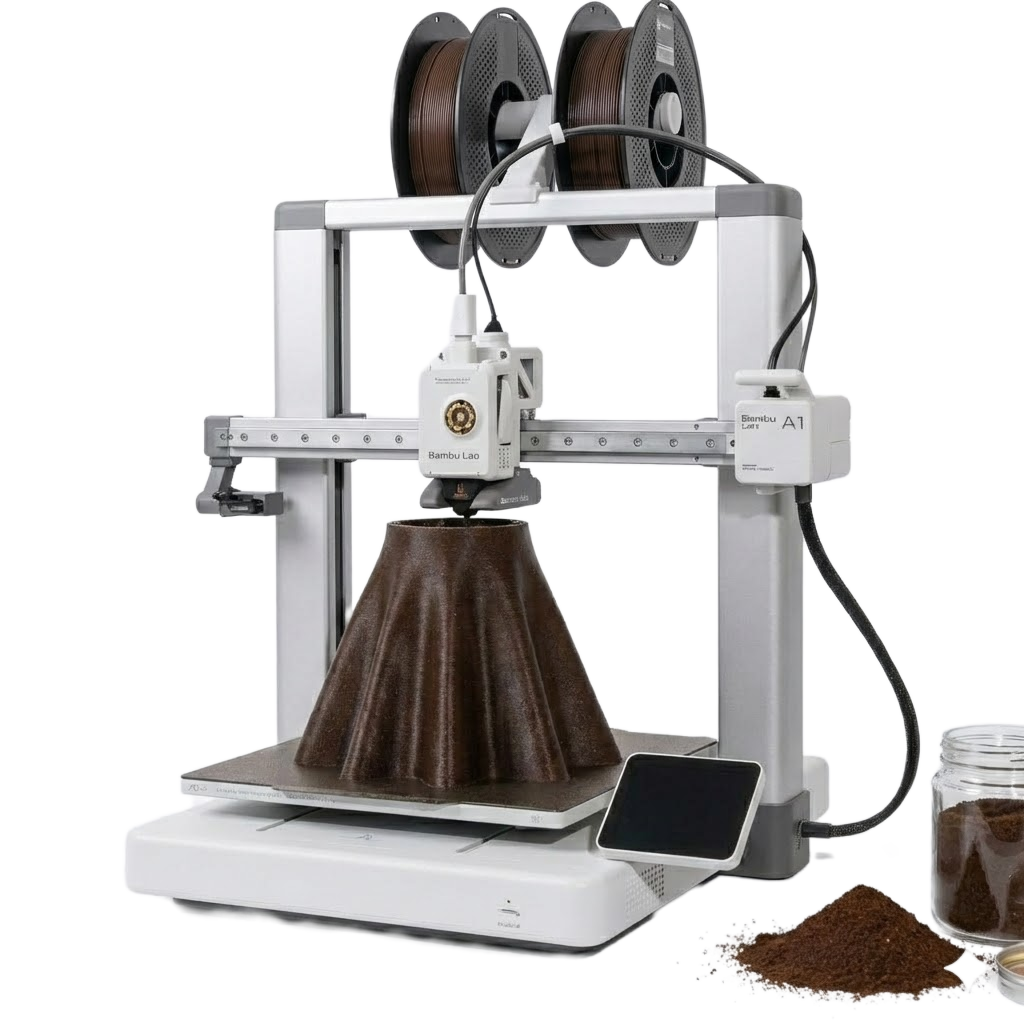
Step 3The compounded pellets are then extruded through a die and wound into filament.
Step 4We then use the filament to make products from our coffee waste.
Step 5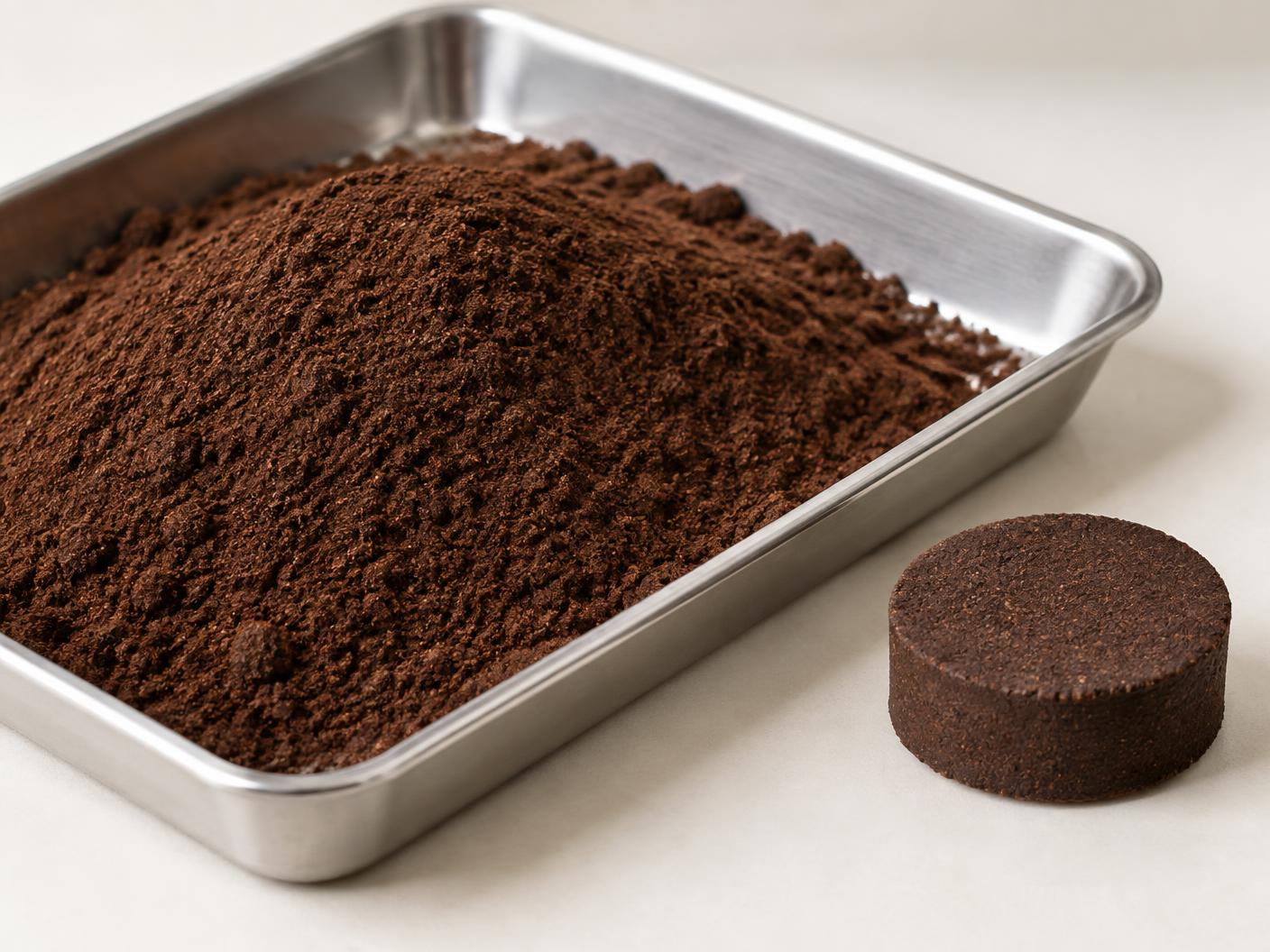
Technical data
Manufacturing into new things
A useful material begins at the coffee machine. Collection routines determine whether the grounds remain viable.
Particle size, carrier and forming method are tuned to the part instead of expecting one mixture to do everything.
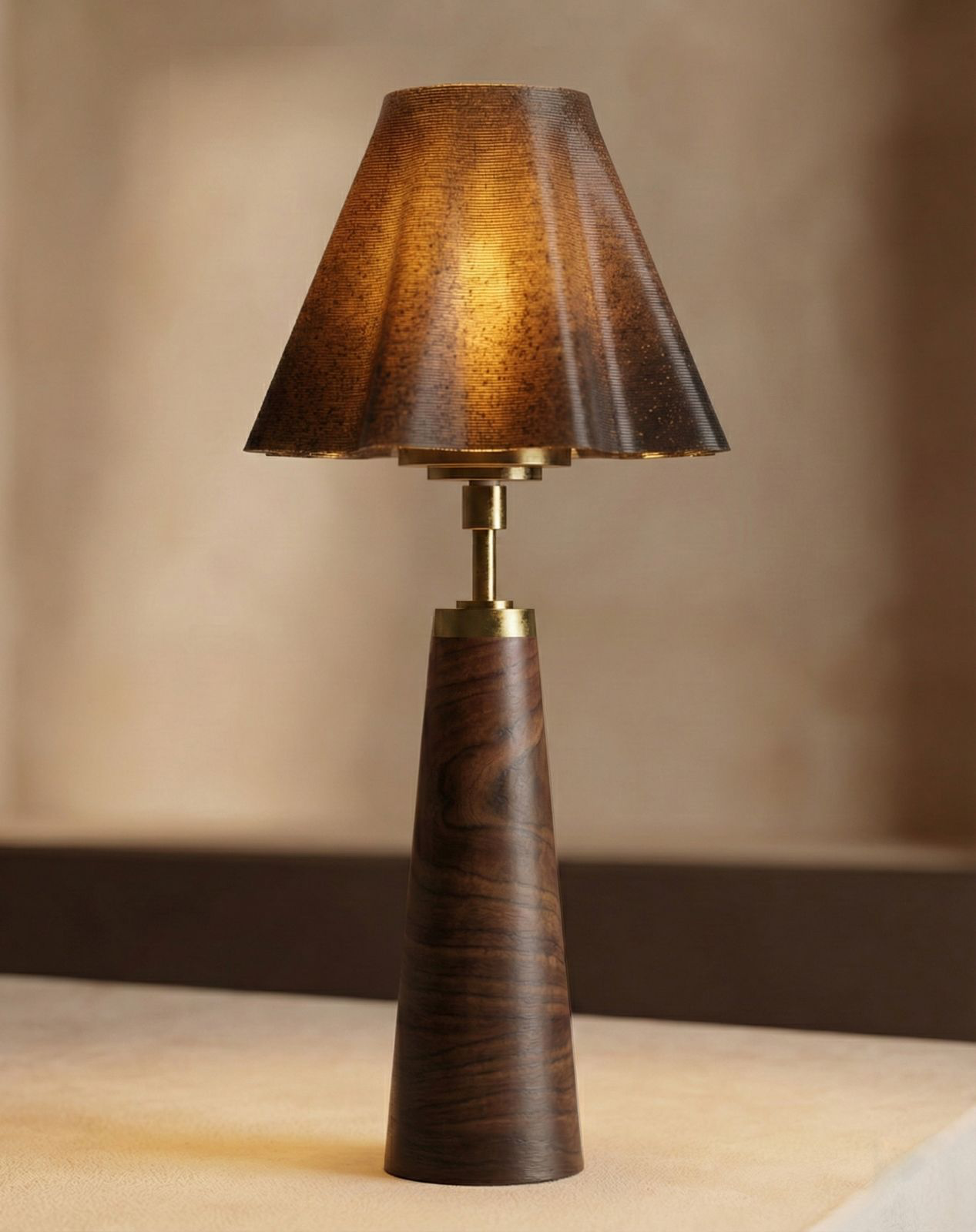
Print lines and natural speckle are treated as finished character, reducing decorative layers that hide the material.
Where it doesn’t belong
Sample recipe / Coffee grounds
This record keeps the source, preparation and production decisions together, so a promising sample can be reviewed and repeated.
Illustrative sample recipe. Ground-to-carrier ratio and process settings are confirmed through component-specific trials.
From source to specification
Material development begins before the workshop. Separation at source protects identity and quality; sampling establishes variation; testing matches the material to an application. Only then can repeatable production be discussed.
Coffee bars, breakfast service and kitchens
Dried, sieved and graded to suit the chosen process
lighting, mirrors, small furniture and interior objects
Samples, process notes and application-specific checks are kept close to the object.
Material record
Each application is intended to carry a useful record: what the object is, where its material came from, how it was prepared, what care it needs and what to do when its first use ends.