
Accessories
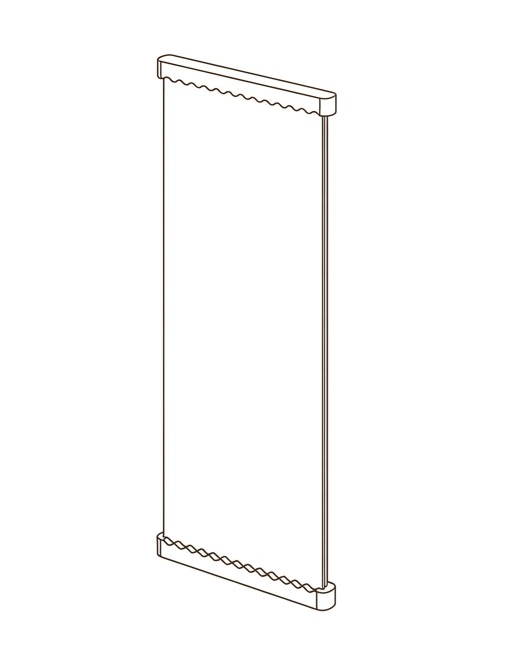
CW-11 Stand Mirror
Regular Pricing£79
Member pricing£67(-15%) · for approved members
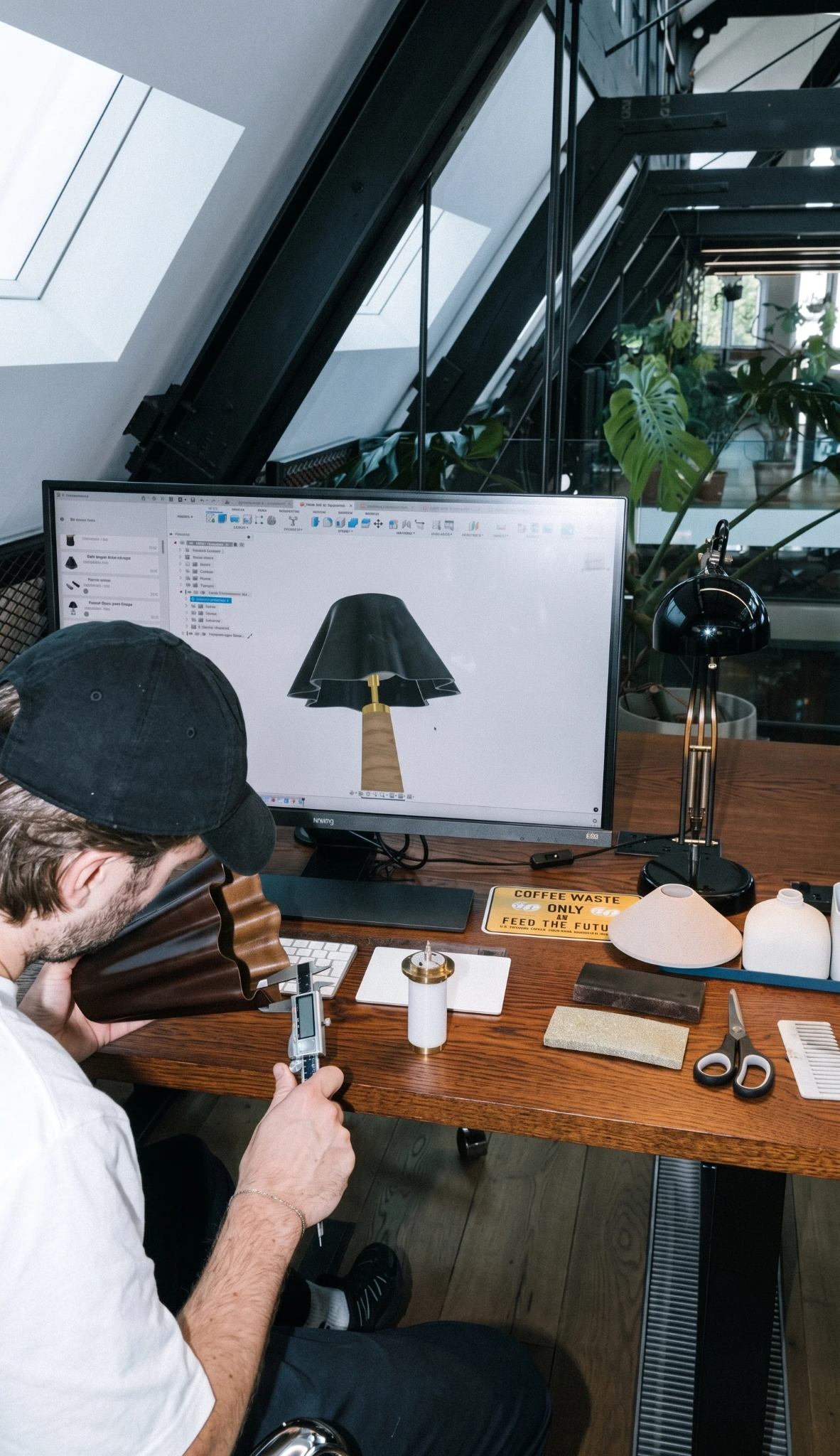
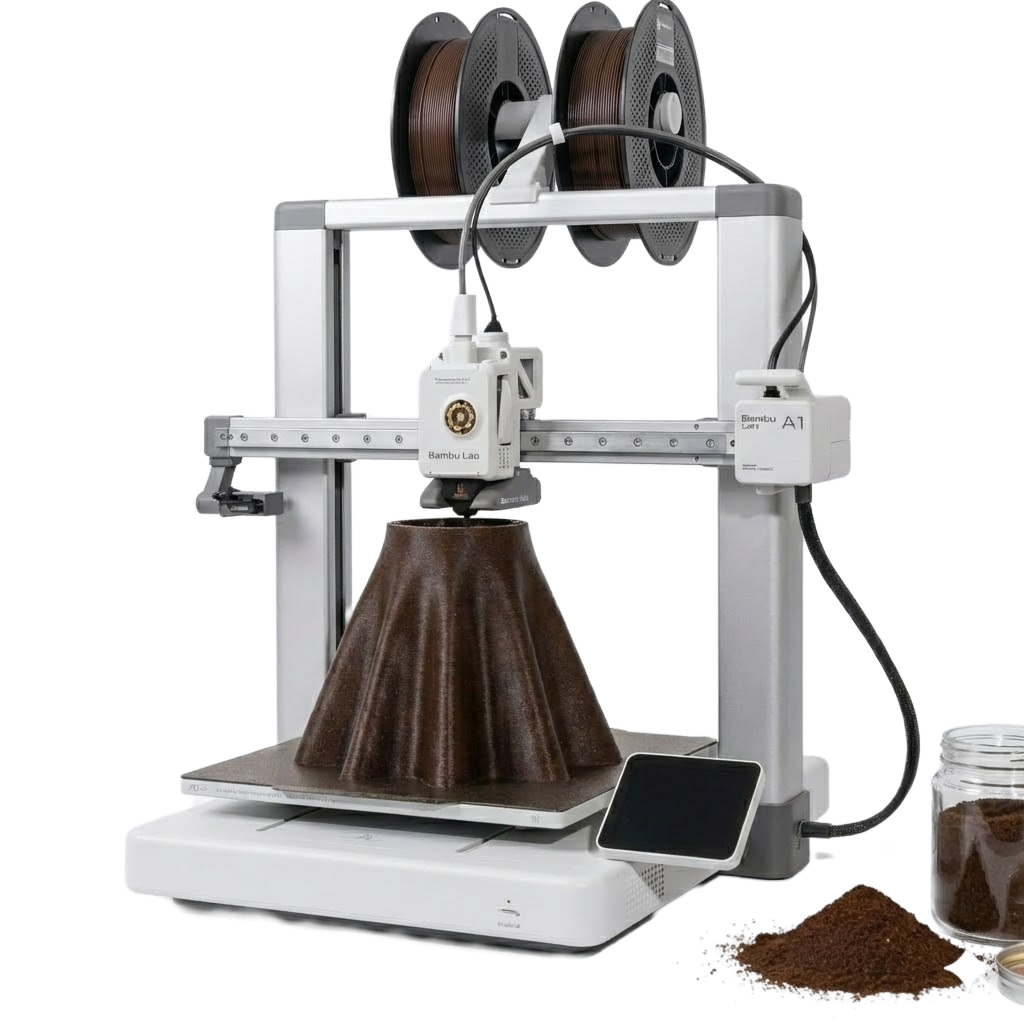
This mirror rethinks a familiar object through material honesty and quiet invention. The glass is held in place by a sculptural clasp, 3D printed from spent coffee grounds.
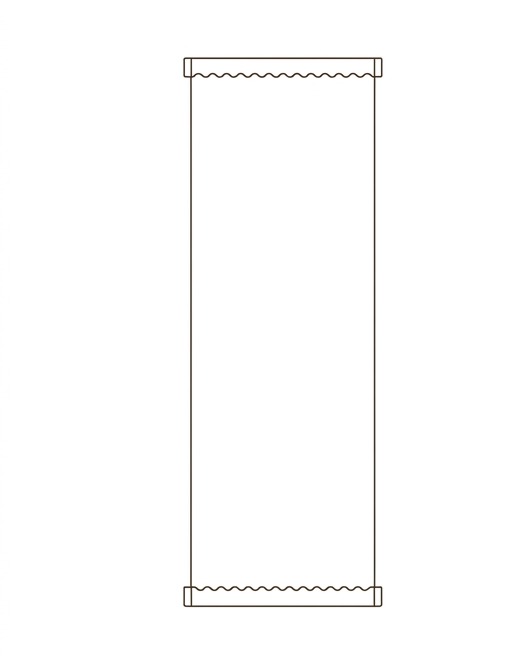
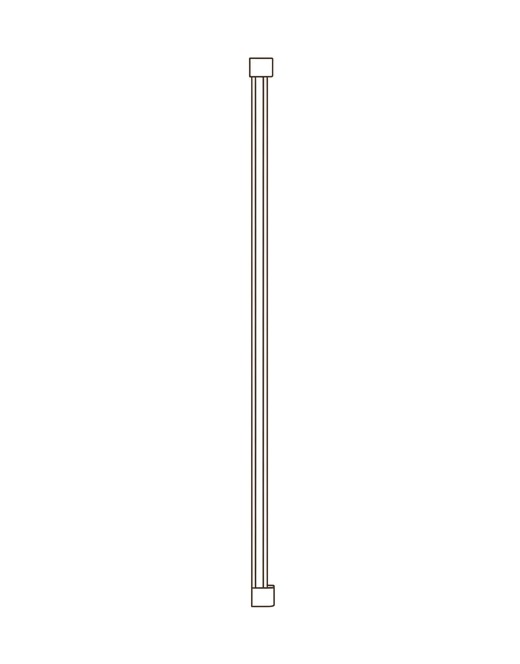
Specification
Shipping and returns
Delivery options, lead times and returns terms will be confirmed for your order. Contact MadeBy with your delivery location and quantity.
Questions
For materials, samples, care, installation or project quantities, ask about this piece.
A record that travels with the piece.
What a piece is made from, how it came together and what happens to it next — held as one record rather than a page of claims.
Passport in development
Carbon against an imported mirror
89.6%
Less CO₂e per mirror
- Saved in production
- 5.78 t CO₂e
- Kept from landfill
- 2.58 t CO₂e
Passport record
cw-11-stand-mirror
- Material
- To be added
- to confirm
- Total weight
- To be added
- to confirm
- Total waste weight
- To be added
- to confirm
- Made at
- To be added
- to confirm
- Assembled at
- To be added
- to confirm
- Waste stream
- Coffee, Cardboard
- recorded
- Feedstock
- Coffee, Bio PLA, Cardboard & Bio binder
- recorded
- Preparation
- Dried, sieved, Shredded & Vacuum packed.
- recorded
How it's made
From coffee, cardboard to this piece.
Wet grounds become a dry, graded feedstock, then a dark speckled composite that can be printed and formed.
Read the coffee grounds streamStep 01
Collect
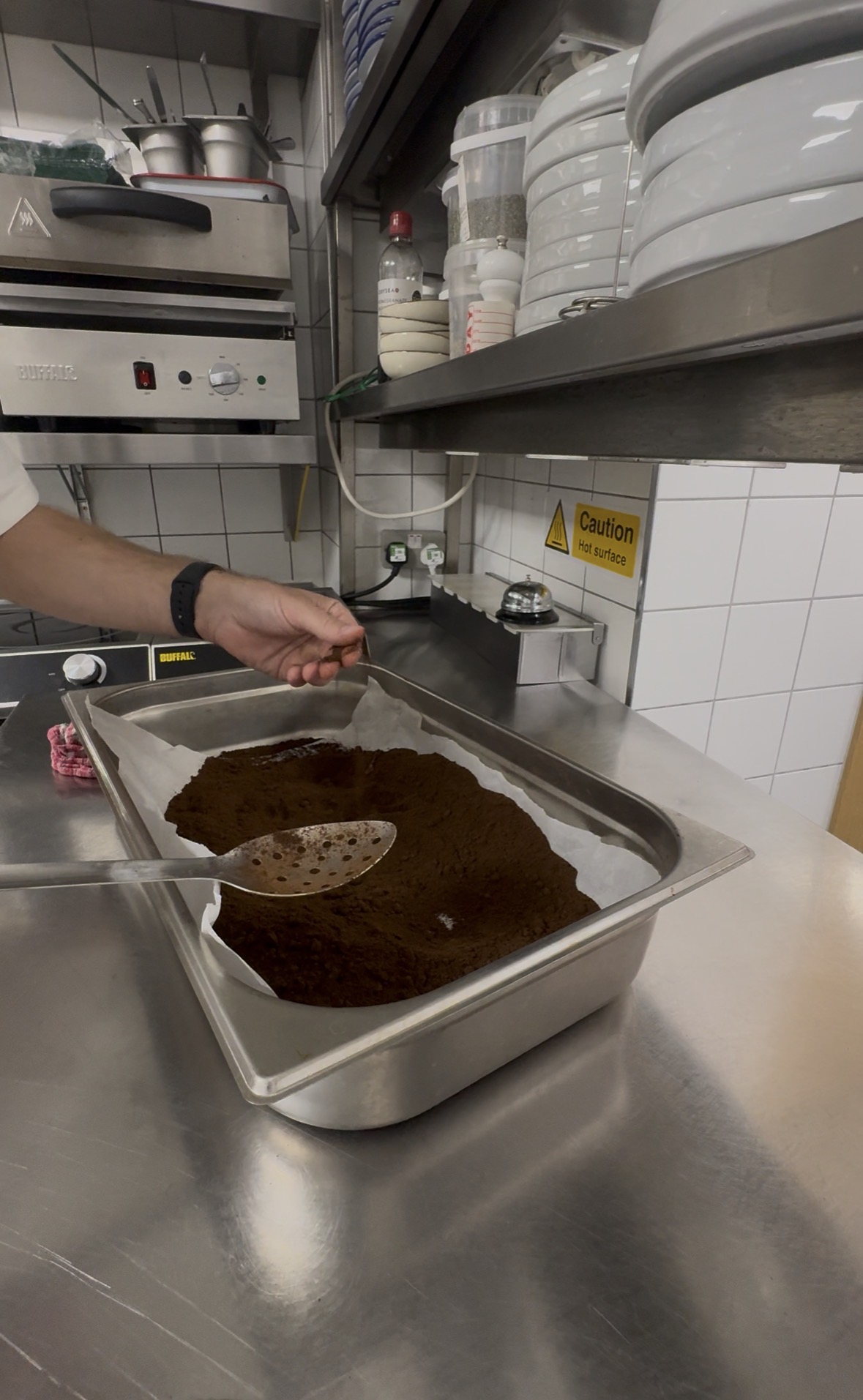
Grounds are captured separately at the machine, without tea bags, food or other service waste.
Step 02
Dry
Moisture is removed promptly to stabilise the material and make storage and transport practical.
Step 03
Compound
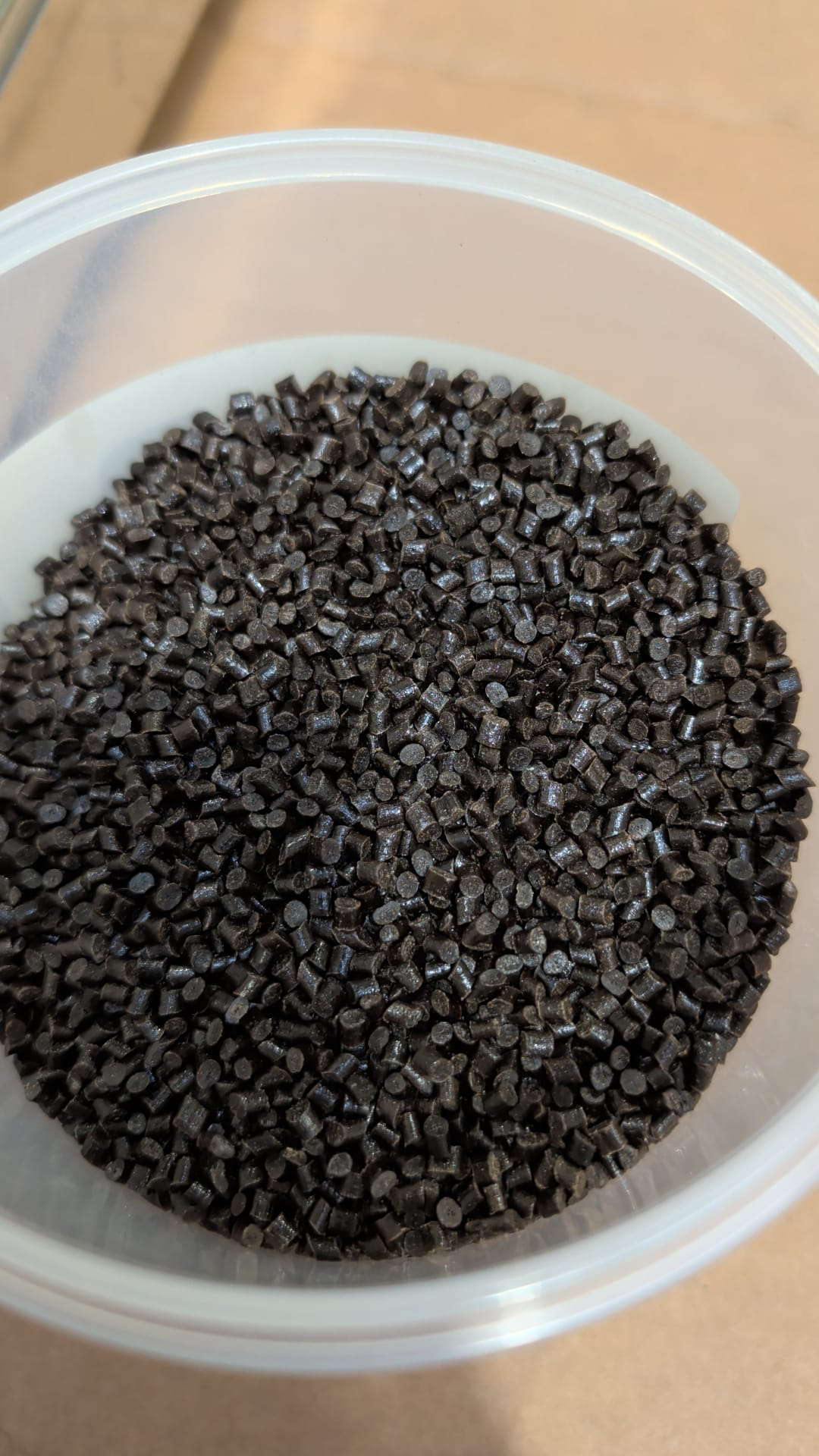
Grounds are combined with a bio PLA recipe for the forming method.
Step 04
Extruded
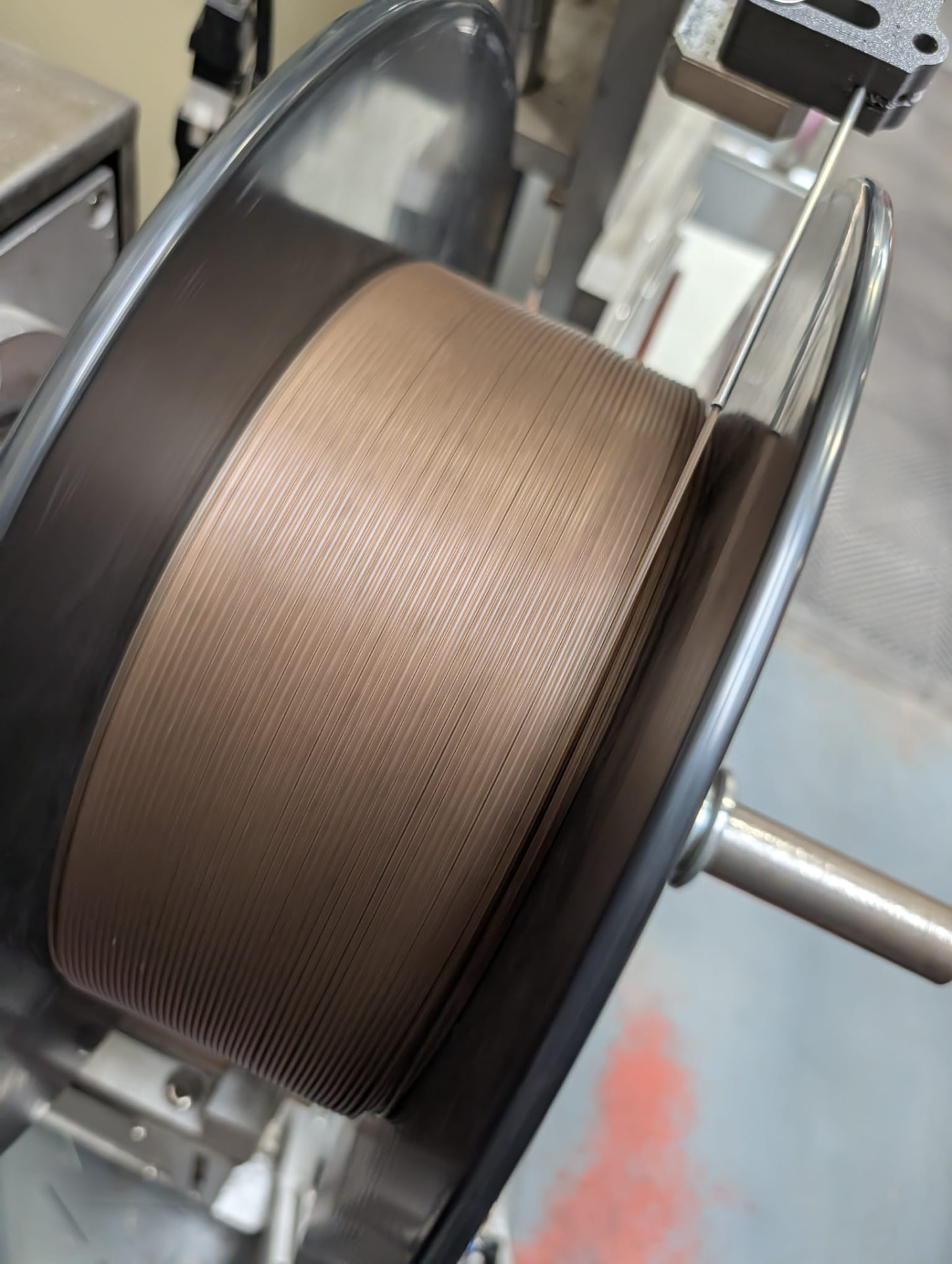
The compounded pellets are then extruded through a die and wound into filament.
Step 05
3D Printing
We then use the filament to make products from our coffee waste.

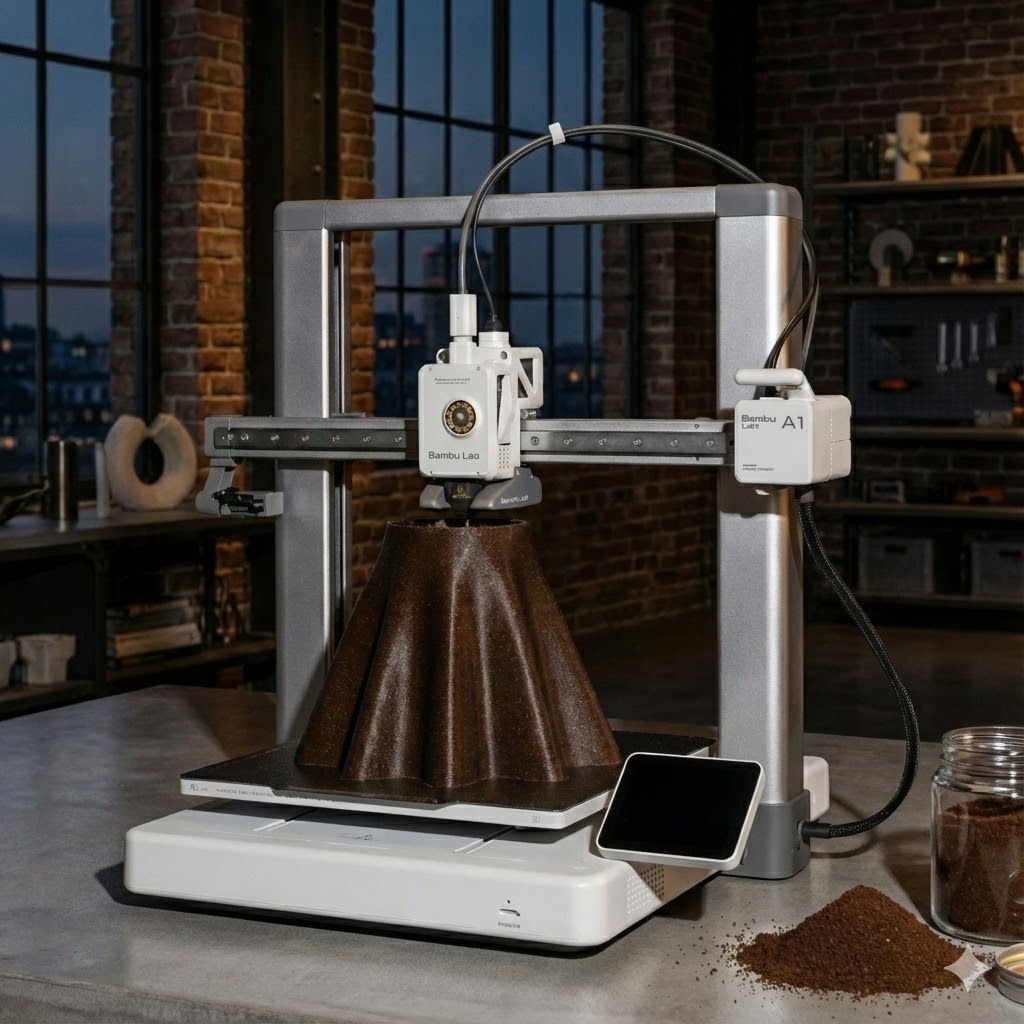
Made layer by layer
Printed, not wasted.
Grounds are dried, compounded with bio-PLA and extruded into filament, then printed layer by layer into the part. Nothing is cut away from a sheet — material goes only where the part needs it.
Fittings are kept separate from the printed body wherever the design allows, so a single part can be replaced rather than the whole piece, and a finished piece can come back to us for reprocessing.